CBD for Inflammitory Bowel Disease

Crohns, IBD, Colitis, etc.... Your gut is full of Cannabinoid receptors
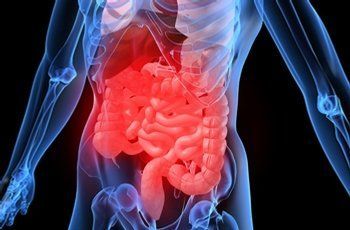
Intestinal issues are uncomfortable for most people to talk about, but not half as uncomfortable as living with them.Inflammatory Bowel Disease is an umbrella term under which lives Crohn's Disease and Ulcerative Colitis. Both of these diseases are characterized by chronic inflammation in the intestinal tract. In this article we will take a look at the differences between these two disorders, symptoms, and how CBD can help alleviate the painful and sometimes debilitating symptoms of these diseases.


What is Crohn's Disease?
Named after 
Dr. Burrill B. Crohn , Crohn's is an autoimmune response that causes chronic inflammation and erosion in the intestines. Crohn's is most typically found in the ileum (end of the small intestine), however it can be found in any part of the gastrointestinal tract, from the mouth to the anus and can affect any of the layers of tissues. Another hallmark of Crohn's is that healthy parts of the intestine can be next to inflamed tissue.


There are 5 types of Crohn's disease:

  1. Ileocolitis - This is the most common type of Crohn's, affecting the end of the small intestine that connects to the colon. Symptoms include: diarrhea, pain/cramping in the mid and lower right quadrant of the abdomen.
  2. Ileitis: Like Ileocolitis, this causes inflammation of the ileum. It also causes abscesses called fistulas to form in the lower right section of the colon. Symptoms include: diarrhea, pain/cramping in the mid and lower right quadrant of the abdomen.
  3. Gastroduodenal Crohn's: This form of Crohn's affects the stomach and the first part of the small intestine called the duodenum. Symptoms include: nausea, lack of appetite, & weight loss
  4. Jejunoileitis: This form affects the second part of the small intestine called the jejunum. Symptoms include: fistulas, abdominal pain ranging from mild to severe, cramps after meals, diarrhea.
  5. Crohn's (Granulomatous) Colitis: This form of Crohn's affects the main part of the large intestine (colon). It can cause fistulas, & ulcers to develop around the anus. Symptoms include: diarrhea, abscesses & bleeding from the rectum and anus, skin lesions, & joint pain


What is Ulcerative Colitis (UC)?
Ulcerative Colitis is a chronic inflammation and sores (or ulcers) of the innermost lining of the large intestine. Unlike Crohn's, it is hallmarked by a constant state of inflammation in the affected area.


There are 5 types of UC:


  1. Ulcerative Proctitis: This form of UC tends to be the mildest form. The inflammation is limited to the rectum/anus. Rectal bleeding may be the only symptom of this form of UC, but some sufferers report pain as well.
  2. Proctosigmoiditis: This form involves the lower part of the colon (sigmoid colon) & rectum. Symptoms include: abdominal cramps & pain, bloody diarrhea, rectal bleeding, feeling the need to move bowels despite them being empty ( tenesmus )
  3. Left-Sided Colitis: In this form, inflammation extends from the descending colon, through the sigmoid colon, and down to the rectum. Symptoms include: abdominal cramps & pain on the left side of the abdomen, bloody diarrhea, rectal bleeding, & unintended weight loss.
  4. Pancolitis: This form involves the entire colon with inflammation spreading throughout. Symptoms include: bloody diarrhea that can be quite severe, severe abdominal cramps/pain, significant weight loss, & fatigue that can be severe.
  5. Acute severe ulcerative colitis: This form is rare and affects less than 20% of people suffering from UC. It also affects the entire colon and can require hospitalization. S ymptoms include: severe pain and cramps, excessive and uncontrollable diarrhea that is often bloody, profuse rectal bleeding, inability to eat, significant weight loss, fatigue, & fever.


Crohn's and UC diagnoses and conventional treatments
Crohn's and UC carry many of the same symptoms that are equally as miserable for people suffering. Diagnostic tests are required to make a good diagnoses. Your doctor will do any combination of tests including: stool samples, blood work, x-rays, CT scans, & colonoscopy. Both Crohn's and UC require many of the same treatments as well which can include: pain relievers, anti-diarrhea drugs, anti-inflammatory drugs such as corticosteroids, antibiotics, & imunosuppressive drugs. The excessive bleeding may cause the sufferer to become anemic as well so many times a doctor will also recommend or prescribe an iron supplement to help your body make more red blood cells & replace the depletion.


How does CBD help with Crohn's and UC symptoms?
Your gut is absolutely full of
cannabinoid receptorsthat interact directly with CBD and other cannabinoids. Although there have not been enough studies done on CBD & IBD, we do know that it is a powerful anti-inflammatory and helps many many people with cramps and pain. Many of the people I speak to are very thankful for CBD suppositories for help with their IBD symptoms, putting the CBD right where they need it.
For more information on CBD and IBD, please take a look at this study by clicking here ----->
Therapeutic Use Of Cannabis In Inflammatory Bowel Disease.

Rustic Oils CBD Of Lee's Summit LLC Blog
By Rachel Crawford January 28, 2026
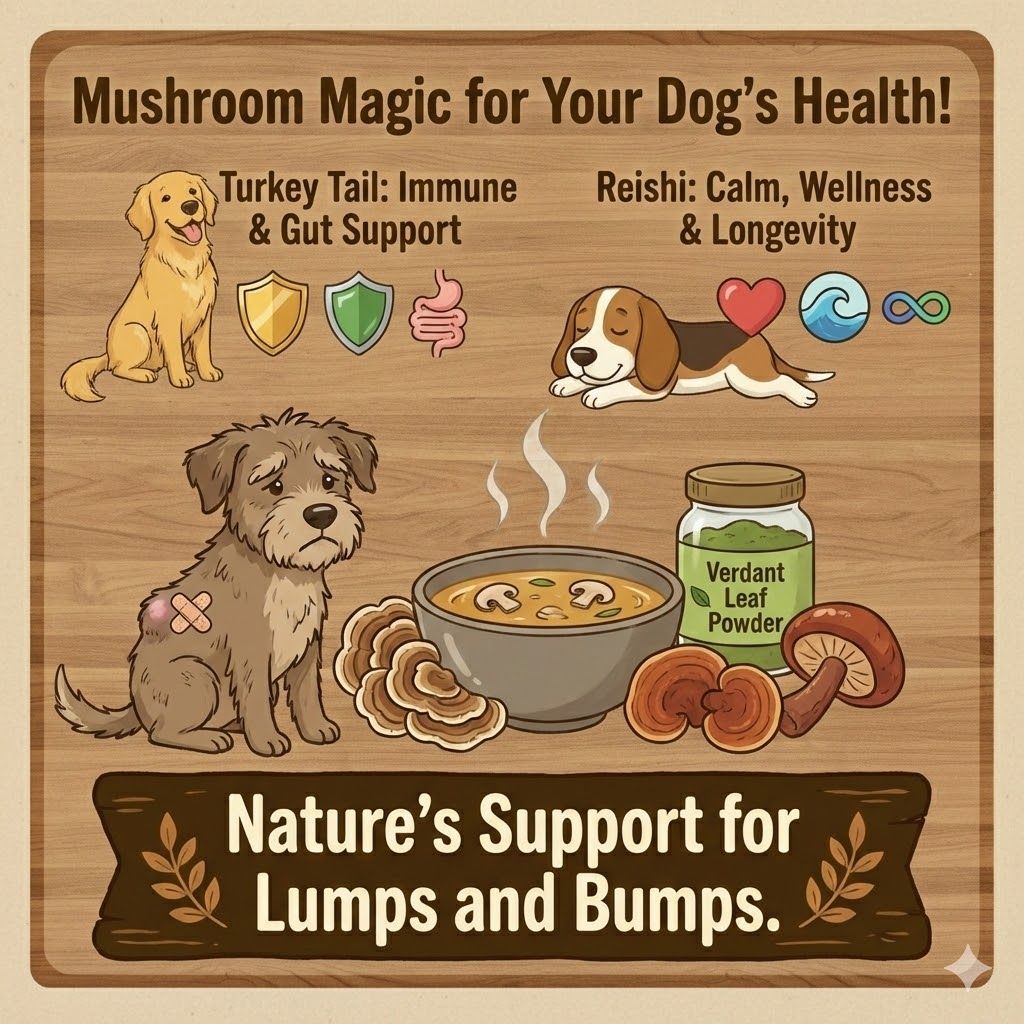
We’ve all had that moment.... . During a belly rub, you feel it—a new "lump or bump" that wasn't there last week. Your heart sinks, and suddenly, nothing else matters than the health of your fur baby This is where the ancient wisdom of mushrooms like Turkey Tail and Reishi steps in. Think of them as nature’s quiet protectors. I have given them to Abbey for a couple of years but I so wish I would have started from the beginning. Turkey Tail is the "Immune Architect." It’s packed with beta-glucans that help the body’s natural defenses recognize and respond to cellular changes. It’s like giving your dog’s immune system a pair of glasses so it can see exactly where it needs to go to work. Reishi is often called the "Mushroom of Immortality," but for our pups, it’s the "Mushroom of Zen." It supports longevity, helps manage the body’s response to occasional stress, and provides much-needed relief for those pesky seasonal allergies. When we combine these in our homemade treats or as a food topper, we aren't just feeding them; we’re fighting for more "zoomies," more tail wags, and more years of companionship. Why We Trust Verdant Leaf When it comes to our pets, "good enough" isn't an option. That’s why I’ve always been uncompromising about the brands I bring into the shop. Verdant Leaf is the gold standard for clean, reliable supplements for a few very specific reasons: Purity First: Their powders are free from the fillers, grains, and "fluff" that often plague commercial pet supplements. You are getting 100% functional mushroom power. Transparent Sourcing: They prioritize high-quality extraction methods, ensuring the beneficial compounds (like those vital beta-glucans) are actually bioavailable for your dog to absorb. Tested & Trusted: Every batch is held to rigorous standards, so you can feel confident that what’s on the label is exactly what’s in the bowl. Using a clean brand like Verdant Leaf ensures that your "fur baby" is getting the support they deserve without any of the junk they don't. Here are links to Verdant Leaf Turkey Tail & Verdant Leaf Reishi Recipes you can make at home! I actually use these powders as a topper for Abbey's food or I make a mushroom broth for her to drink, but you can also create these yummy treats at home for pups that are a little pickier "Immune-Boost" No-Bake Peanut Butter Balls Best for: Quick prep and masking the earthy mushroom taste. Ingredients : 1 cup Oat flour (or blended rolled oats) 1/2 cup Natural peanut butter (ensure it is Xylitol-free) 1/4 cup Unsweetened applesauce or mashed banana. Verdant Leaf Powder: 1/4 {1/8 tsp each species, or 1/4 tsp if you are using only one species} tsp per 10 lbs of dog weight (totaled for the batch size) Instructions : Mix the mushroom powder into the peanut butter and applesauce until well-blended. Stir in the oat flour until a dough forms. Roll into bite-sized balls based on the dog's daily dosage needs. Store in the fridge for up to a week or freeze for longer. Sweet Potato & Reishi "Cookies" Best for: Dogs with sensitive stomachs or allergies. Ingredients: 1 cup Mashed cooked sweet potato 1 1/2 cups Brown rice flour (or whole wheat flour if tolerated) 1 Egg Verdant Leaf Powder: Calculate total dosage for the number of cookies (e.g., if making 20 cookies and the dog needs 1/2 tsp daily {1/4 tsp each species, or 1/2 tsp of any single species}, add 10 tsp to the batch). Instructions : Preheat oven to 175°C (350°F).Mix all ingredients into a dough. Roll out and cut into shapes. Bake for 20–25 minutes until firm. Golden Mushroom Bone Broth (Liquid Topper) Best for: Older dogs who might enjoy a warm topper on their meals. Ingredients : 2 cups Low-sodium beef or chicken bone broth (onion/garlic-free) 1/2 tsp Turmeric (for extra anti-inflammatory benefits) Dash of black pepper (needed to activate anti-inflammatory benefits of turmeric) 1 tsp coconut oil, beef tallow, or fish oil Verdant Leaf Powder: Whisk in 1/4 {1/8 tsp each species, or 1/4 tsp if you are using only one species} tsp per serving. Instructions : Warm the broth slightly (not boiling).Whisk in the mushroom powder and turmeric until dissolved. Pour over kibble or freeze in ice cube trays for "pupsicles." MUSHROOM DOSING GUIDELINE * Daily Maintenance Dosage (Give once daily for general health) Under 20 lbs: 1/4 teaspoon 20 to 50 lbs: 1/2 teaspoon 50 to 90 lbs: 3/4 teaspoon Over 90 lbs: 1 teaspoon Therapeutic/ Loading Dosage (Give for "lumps and bumps" or the first 2 weeks of use) Under 20 lbs: 1/2 teaspoon 20 to 50 lbs: 1 teaspoon 50 to 90 lbs: 1 & 1/2 teaspoons Over 90 lbs: 2 teaspoons *The statements made regarding these products have not been evaluated by the Food and Drug Administration. The efficacy of these products has not been confirmed by FDA-approved research. These products are not intended to diagnose, treat, cure or prevent any disease. All information presented here is not meant as a substitute for or alternative to information from health care practitioners. Please consult your health care professional about potential interactions or other possible complications before using any product. The Federal Food, Drug, and Cosmetic Act require this notice.
By Emily Held January 19, 2026
A simple guide + DIY cleanser recipe
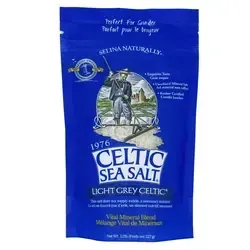
Light Grey Celtic Sea Salt
By Ian Hilley March 24, 2025
Let's hear from the experts on the benefits of Celtic Sea Salt
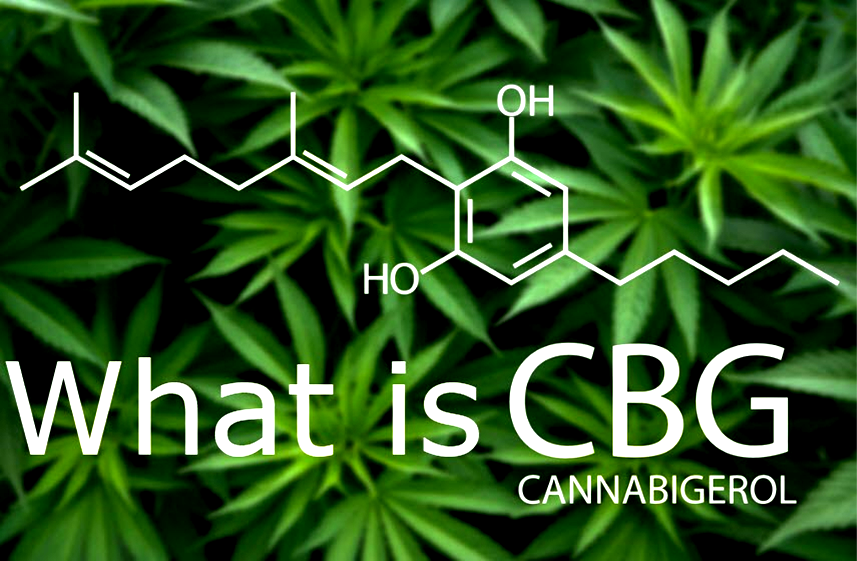
What is CBG?
By Rachel N. Crawford September 26, 2024
CBG is known as the "Mother of all cannabinoids". In this article we will explore CBG, its many benefits, and how to choose the right product for your needs.
•	The Greek Physician Dioscorides described Agarikon mushrooms as the elixir of long life
By Rachel N. Crawford May 18, 2023
Agarikon loves your respiratory system. Read about this amazing nutritional mushroom
Explore the benefits of the Reishi Mushroom
By Rachel N. Crawford March 15, 2023
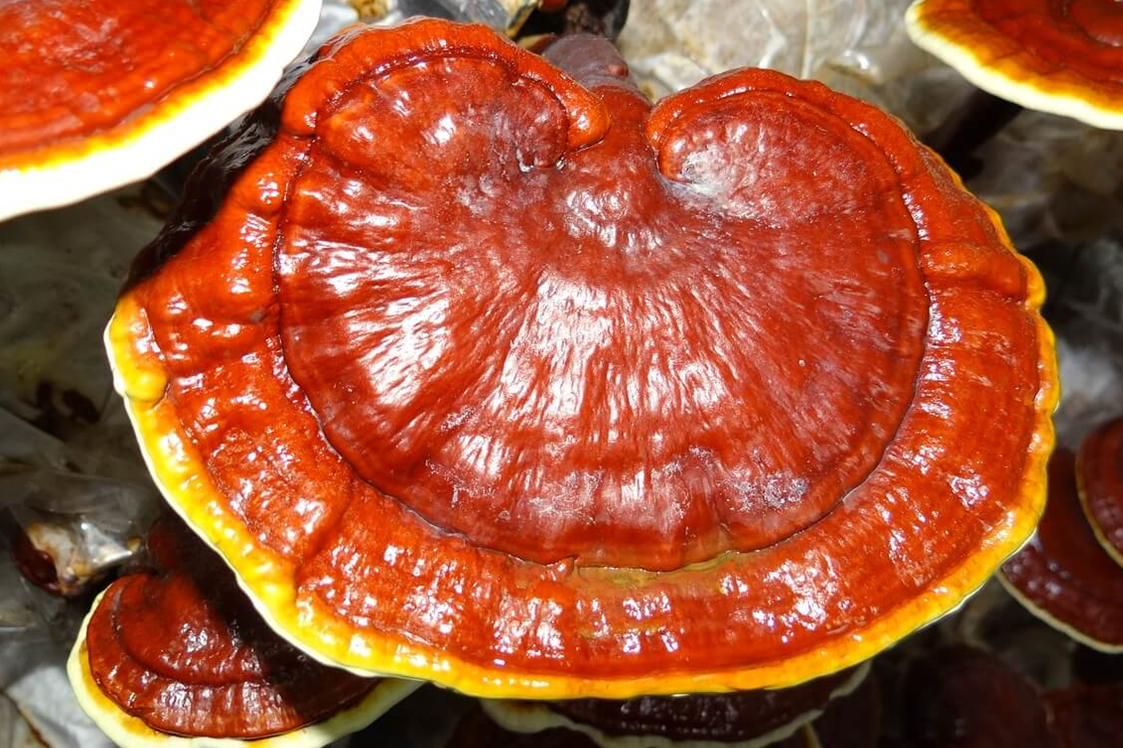
Reishi was first documented in one of the world's oldest pharmacopeia, possibly written as long as 5000 years ago! That's wild. Known in Chinese medicine as "Ling Zhi" meaning "plant that nourishes the spirit", this little mushie has a big personality.
Cordyceps - a boost of caffeine free energy
By Rachel N. Crawford March 8, 2023
Improve your energy levels, endurance, & immunity with cordyceps
Beginners guide to nutritional mushrooms:  How do I use them?
By Rachel N. Crawford February 7, 2023
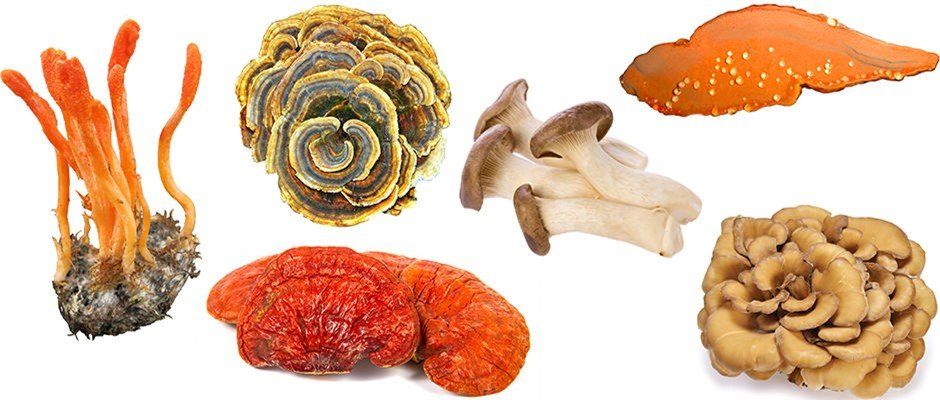
When Studying the health benefits of mushrooms, one could easily become overwhelmed. In this article we are going to focus on 6 species of nutritional/medicinal mushrooms. Lions Mane, Turkey Tail, Reishi, Cordyceps, Agarikon, & Chaga.
There is much more to cannabis than THC & CBD.  Let's look at minor cannabinoids
By Rachel N. Crawford December 29, 2022
CBD & THC are not the only beneficial cannabinoids in the cannabis plant, not by a long shot. In this article we are going to look at some of the lesser known cannabinoids & the role they play in your health.
Many plants and super foods are cannabimimetic, meaning that they have properties that mimic cannabi
By Rachel N. Crawford July 24, 2021
Many plants and super foods are cannabimimetic, meaning that they have properties that mimic cannabinoids in our bodies. Our Endocannabinoid System needs cannabinoids to function properly.
More Posts