What is Thieves Oil?
A simple guide + DIY cleanser recipe
What Is Thieves Oil and How Is It Used?
Thieves Oil has become a staple in many homes, especially for people looking to eliminate toxins from their routines. You’ll often hear it mentioned in conversations about DIY cleaners, aromatic blends, and even hygiene products — but what exactly is it, and how is it meant to be used?
If you’ve ever wondered what Thieves Oil is, why it’s so popular, or how to use it safely, you’re not alone. We’ll break it down for you here.
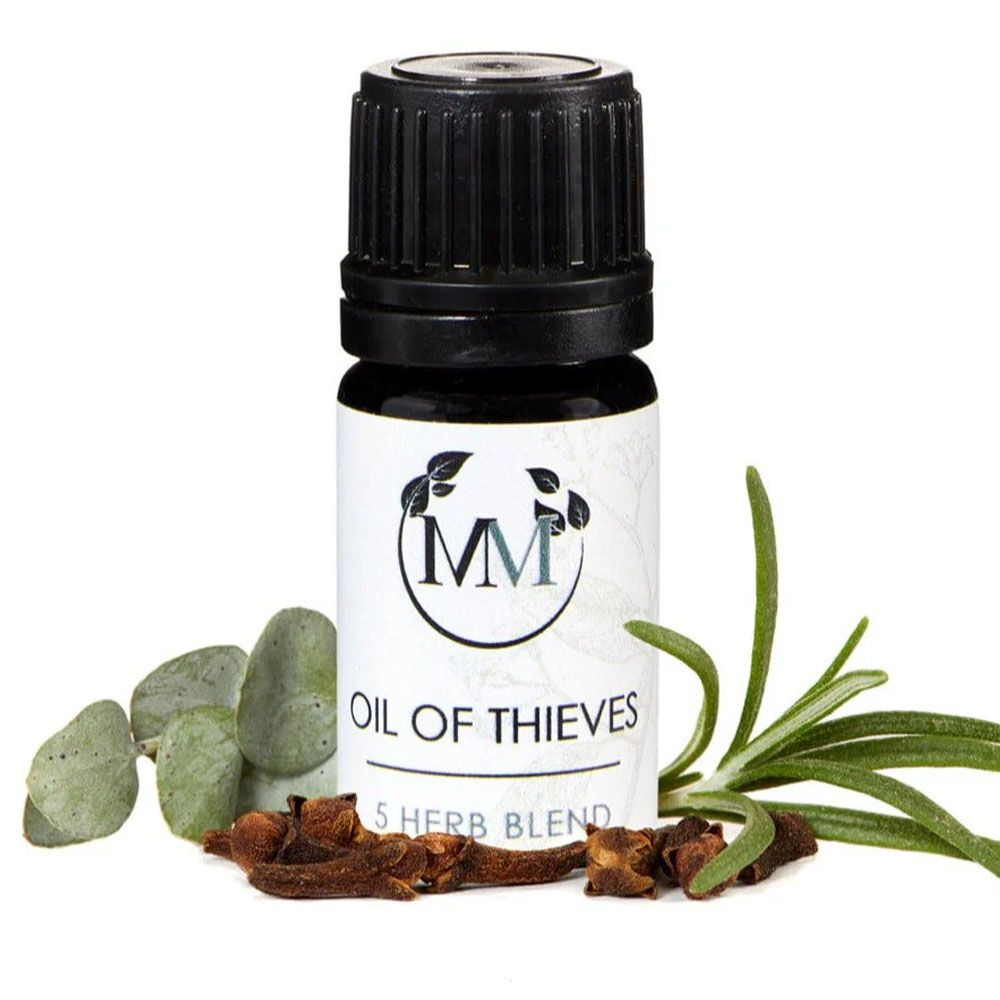
At Mamas Medicinals, our version is called Oil of Thieves, honoring the traditional blend studied in colleges to be antiviral, antiseptic, antibacterial, and antimicrobial. The in vitro studies were conducted on the herbal profiles themselves, not on their effects in people.
Let’s dive into how I use it in my own home and health routines, as well as how we incorporate it as a carefully measured ingredient in our products.
Where Thieves Oil Came From
Thieves Oil is a blend of essential oils often referred to as the “Four Thieves.” There are many versions of how it came to be, but the way I remember it goes like this:
During the Black Plague, people who caught the plague were confined to their homes to die. Others would steal from the sick and the dead. Eventually, the king had four thieves captured. It turned out they were botanists and perfume makers who used essential oils infused in apple cider vinegar, dousing their bodies before entering the homes they robbed.
There are different theories about which herbs were used, but considering the spice trade of that era, colleges have since studied many essential oils and developed what’s now referred to as the modern-day Thieves Oil blend. These studies show the herbal profiles to be antiviral, antiseptic, antibacterial, and antimicrobial, which is why we use this specific ratio in our own version, Oil of Thieves.
Blends vary, but the modern Thieves Oil ratio, and the one we use, consists of:
- Clove
- Cinnamon
- Lemon
- Eucalyptus
- Rosemary
Each of these essential oils is highly concentrated. When combined, they create a powerful aromatic blend commonly used in household and lifestyle applications but not as a ready-to-use skincare product on its own.
How I Personally Use Oil of Thieves
I don’t use Oil of Thieves casually; I use it intentionally. It’s a strong blend, and I treat it with respect. In my own home, I reach for it in a few very specific ways, always paying attention to form, dilution, and context. Check out below how I use Oil of Thieves as part of my everyday home routine.
Cleaning
Laundry & Dishes
Add a few drops to the dishwasher or laundry to give everything a clean, herbal finish.
All-Purpose Cleaning
Combine
Oil of Thieves with baking soda to scrub sinks, bathtubs, and toilets.
Sanitizing High-Touch Areas
For doorknobs, light switches, and other high-touch surfaces (avoiding wood), mix 12 drops of
Oil of Thieves into 2 ounces of high-proof alcohol like Everclear.
In Aromatic & Steam Routines
Diffusers or Stove-Top Water
Use it in diffusers or add a few drops to a pot of water on the stove to disinfect airborne bacteria and support a clean-smelling space.
Simmer Pots
Simmer citrus peels, spices, and a couple drops of
Oil of Thieves. It’s one of the easiest ways to naturally freshen the scent of the whole house.
Steam Routines
Add a couple of drops to a cup of hot water, soak a towel, place the damp towel over your head, and breathe slowly and deeply.
This is one of the oldest ways people have worked with strong botanicals: through scent and vapor, not direct application.
In Oral Care Formulations
Toothbrush Cleaning
Add one drop to your toothbrush once a week to help keep bacteria away.
Teeth Whitening & Oral Health
Add a drop to your toothbrush to naturally disinfect and brighten teeth.
Toothache & Gum Support
Apply a drop directly to affected gums for relief.
A Note on Strength & Responsibility
Oil of Thieves is powerful. That’s why I don’t believe in throwing it at everything or using it without intention. How it’s diluted, what it’s paired with, and why it’s being used makes all the difference.
This is the same philosophy I use in my own home — and the same one behind every product we make at Mamas Medicinals
Patch test first. Essential oils are potent and should always be used thoughtfully.
Oil of Thieves in Our Toothpaste Powder
In this dry, mineral-based formula, Oil of Thieves is used to:
- Provide a naturally fresh, clean-tasting experience
- Support a polished feel on teeth
- Help lift everyday surface buildup when brushing
Combined with gentle minerals and botanical ingredients, it contributes to a bright, clean-mouth feel without relying on synthetic flavors or foaming agents.
Is Thieves Oil Safe for Skin?
This is one of the most common and important questions.
In its essential oil form, Thieves Oil is not designed to be applied directly to the skin. Oils like clove and cinnamon are known to be especially potent and may be irritating when used undiluted.
A few important things to understand:
- Essential oils are highly concentrated plant extracts
- “Natural” does not always mean gentle
- Direct application will potentially overwhelm sensitive or compromised skin
When essential oils are used on skin, they’re typically:
- Included in very small, intentional amounts
- Balanced with carrier oils or infused bases
- Patch tested before regular use
That said, there are two times I have used Oil of Thieves undiluted. Please note that it may burn, and I would not use it on areas where the skin is especially sensitive.
Warts
Apply directly to the wart every hour for about a week. You will see the wart roots surface and fall off, and it does not hurt.
Cold Sores
At the first sign, apply one drop hourly with Healing Salve.
Note: This is not a recommendation. This is simply how my household has used Oil of Thieves undiluted, and we do not suggest others do the same.
Home Remedies
Quick Cold Relief
Rub 2 drops mixed with Mamas Medicinals Healing Salve on the bottoms of each foot.
Lung Congestion & Allergies
Add a few drops to a pot of boiling water, cover your head with a towel, and breathe in the vapors.
Sore Throat
Dilute a few drops in water and gargle to soothe discomfort.
Bronchitis
Apply to the upper chest and throat with Mamas Medicinals Healing Salve for respiratory support.
Open Wounds
Apply 1 drop mixed with Mamas Medicinals Healing Salve to help prevent infection.
Acne
Dilute with jojoba or macadamia oil and apply directly to blemishes.
Hand Sanitizer
Mix 12 drops
Oil of Thieves, 2 oz high-proof alcohol (Everclear), ½ teaspoon Vegetable glycerin, 1 teaspoon Aloe vera gel
Explore the Healing Salve →
How Oil of Thieves Is Used in Formulated Products
Oil of Thieves isn’t only used for DIY home recipes. In thoughtfully formulated products, it can also play a supportive role in skin and oral care—when used in the right amount and context.
Oil of Thieves in Our Healing Salves
In our Healing Salves, Oil of Thieves is used in a very small amount, carefully balanced within a slow-infused botanical base.
Rather than delivering the intensity of a standalone essential oil, this approach allows the blend to:
- Support skin comfort when the barrier is compromised
- Complement other botanicals traditionally used for soothing dry, stressed skin
Why Oil of Thieves Matters for Eczema-Prone Skin
We’ve helped hundreds of customers with eczema, and in my experience, Oil of Thieves is part of why our salve works so well for so many people. Eczema often involves higher levels of Staphylococcus aureus, a type of bacteria that has been widely studied, and Oil of Thieves has also been studied for its antibacterial properties. When used in the right amount, within a slow-infused base, I believe this balance makes a real difference.
The key is not more oil, but the right amount—used slowly, diluted, and supported by whole-plant infusions.
Thieves Oil vs. Thieves-Infused & Formulated Products
It’s important to understand the distinction between essential oil blends and formulated botanical products.
- Essential oil blends are fast, concentrated, and aromatic
- Formulated products use essential oils as part of a larger system
- Infused bases extract plant properties slowly over weeks, not minutes
This is why many people with sensitive skin prefer products where essential oils are supporting ingredients, not the entire formula.
The process matters—not just the plant.
Simple DIY Oil of Thieves Recipes for the Home
Once you understand what Oil of Thieves is best suited for, it becomes a useful tool for simple household routines.
DIY Thieves-Style All-Purpose Cleaner
Ingredients
- 1 cup distilled water
- 1 cup white vinegar
- 20 drops Oil of Thieves
- Optional: 1 teaspoon natural dish soap
- Optional botanical boost:
- Fresh orange peel or
- 1 small rosemary stem
Instructions
- Combine all ingredients in a glass spray bottle
- Shake gently before each use
- Use on countertops, sinks, and high-touch surfaces
Avoid natural stone. Designed for everyday cleaning, not disinfecting.
Final Thoughts
Thieves Oil–style blends have earned their place as versatile household staples. When used thoughtfully, Oil of Thieves can support low-tox home routines—and, when carefully formulated, can also play a role in skin and oral care products designed for sensitive users.
The difference is intention, dilution, and respect for the plant.
Patch test first, especially when working with essential oils.
This information is educational and not intended as medical advice.
Explore
Oil of Thieves and our slow-infused formulations →
https://tcjuvg-rf.myshopify.com/products/oil-of-thieves?_pos=1&_psq=thie&_ss=e&_v=1.0
Resources
https://pmc.ncbi.nlm.nih.gov/articles/PMC3873673/
https://scispace.com/pdf/aromatherapy-art-or-science-2klfph2epq.pdf
https://www.mdpi.com/1424-8247/14/12/1210
https://repository.arizona.edu/handle/10150/633604
Rustic Oils CBD Of Lee's Summit LLC Blog